

This is the ABS release about the June CPI inflation result.
The Consumer Price Index (CPI) rose 3.8 per cent in the 12 months to June 2026, according to the latest data from the Australian Bureau of Statistics (ABS).
The largest contributor to annual inflation in June was Housing, which rose by 6.8 per cent. The next largest contributors were Food and non-alcoholic beverages and Recreation and culture, both rising by 3.3 per cent.
All groups CPI, Australia, monthly and annual movement (%)
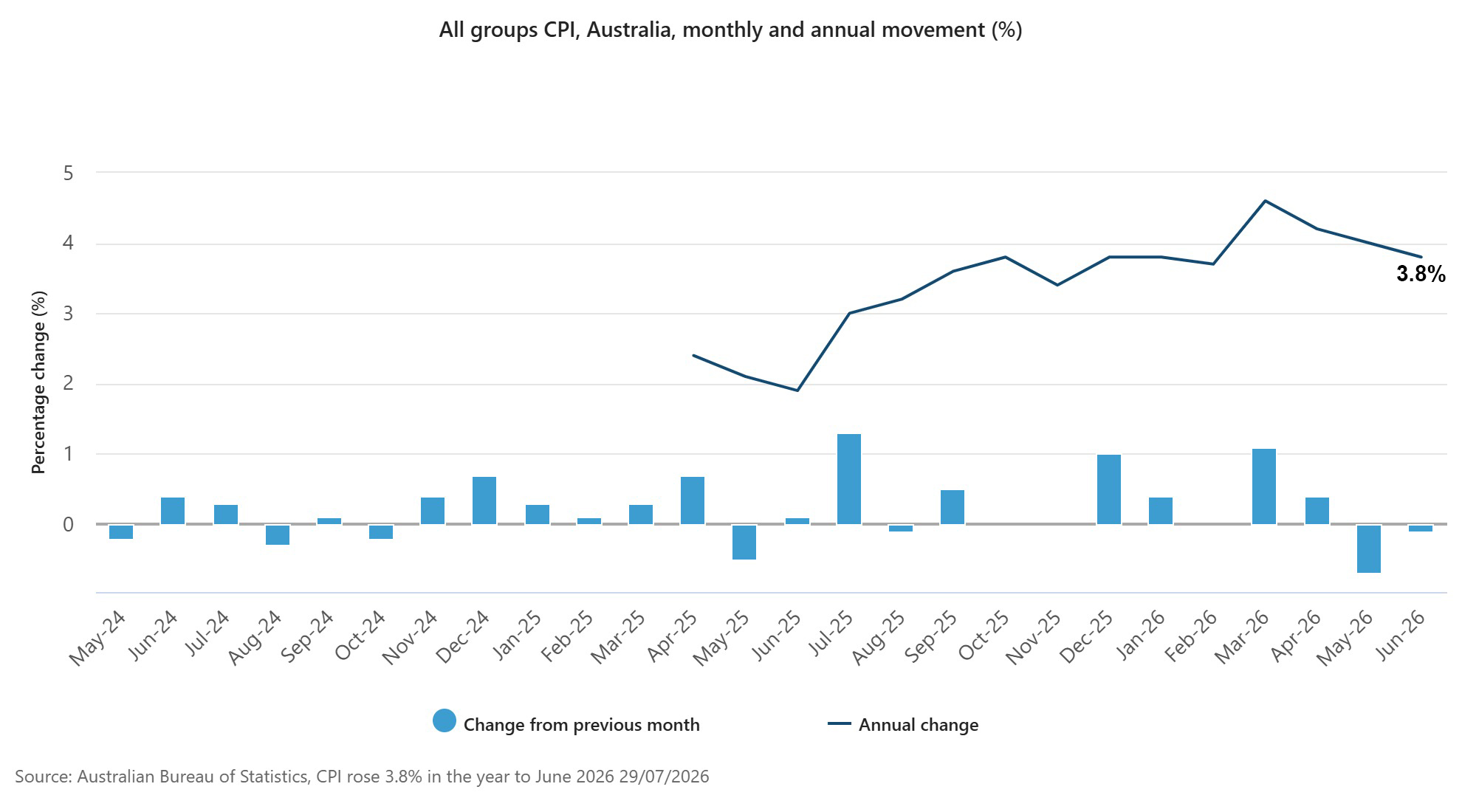
When prices for some items change significantly, measures like the Trimmed mean can give more insights into how underlying inflation is trending without the impact of temporary shocks.
For example, Automotive fuel has been excluded from the Trimmed mean every month since March 2026 when the Middle East conflict impacted fuel prices.
Rachael McCririck, ABS head of price statistics, said: “When we look through some of the bigger price movements, underlying inflation is steady at 3.6 per cent in the 12 months to June 2026. This is the same as in the 12 months to May 2026.”
Annual Housing inflation of 6.8 per cent in the 12 months to June reflects rising costs for Electricity and New dwellings.
“Electricity remains one of the biggest contributors to annual inflation, with costs 22.4 per cent higher than 12 months ago,” Ms McCririck said.
“This is largely because government rebates which reduced household electricity bills have ended.”
“Annual inflation for New dwellings has reached its highest level in almost three years, at 5.8 per cent. This was driven by builders passing on higher material and labour costs,” Ms McCririck added.
Recreation and culture prices rose 3.3 per cent in the 12 months to June, up from 2.4 per cent in the 12 months to May.
“Prices for Holiday travel and accommodation rose 4.6 per cent in June driven by more travel to the northern hemisphere with the start of their peak tourist season and higher jet fuel prices.”
Annual inflation for Transport has moderated, recording a 0.1 per cent rise, down from a 3.3 per cent rise in May.
This was driven by Automotive fuel prices falling for three consecutive months between April and June 2026.
“Lower world oil prices as a result of some stabilisation in the Middle East in June contributed to fuel prices falling 10.9 per cent in the month,” Ms McCririck said.
“The federal government’s fuel excise relief measures which contributed to lower Automotive fuel prices in April and May, also remained in place.”
Comments
We welcome your comments below. If you are not already registered, please to comment.
Remember we welcome robust, respectful and insightful debate. We don't welcome abusive or defamatory comments and will de-register those repeatedly making such comments.
Please to post comments.